Södertörn Center for Ancient Philosophy (SCAPh) brings together researchers and students from around to the world specializing in ancient Greek philosophy. Its purpose is to promote scholarship, foster collaboration, exchange ideas, and explore innovative applications of ancient wisdom to address contemporary challenges. The center organizes workshops, conferences, hosts guest lecturers and provides resources for researchers and students with the purpose of building a vibrant and relevant community. The center is housed at Södertörn University, in Stockholm, and its research is generously sponsored by the Axel and Margaret Ax:son Johnson Foundation for Public Benefit. Read more about the center and its vision here.

Plato and Political Dialectic
SCAPh’s inaugural research project is entitled ‘Plato and Political Dialectic’. This project will explore Plato’s political philosophy with a particular emphasis on the use and possibilities of the dialogue form. The project is not only designed to help deepen and advance our understanding of Plato’s political philosophy, but also to contribute to a broader conversation about the future of democracy, citizenship, and the role of reason in public life.
- Plato and LawsOn the 16th of October we will arrange an international workshop on Plato and Laws, with Ikko Tanaka (Oberlin), Nicholas D. Smith (Lewis & Clark) and Irina Deretić (Belgrade). Ikko Tanaka is an associate professor in the College of Arts and Sciences at J. F. Oberlin University in Machida, Japan. He earned his Ph.D. from Kyoto University in March 2014. His academic publications encompass ancient philosophy, digital humanities, and higher education studies. Nicholas D. Smith is James F. Miller Professor Emeritus of Humanities in the Departments of Classics and Philosophy at Lewis & Clark College in Portland, Oregon, USA. Smith specializes in ancient Greek philosophy. He has co-authored several notable works, including “Plato’s Socrates,” which received the Outstanding Academic Book award in 1994. Irina Deretić is professor of philosphy at the Department of Philosophy at the University of Belgrade, Serbia, where she also serves as head of the project “The History of Serbian Philosophy.” Deretić’s research focuses on ancient Greek philosophy, particularly Plato’s metaphysics, philosophy of language, and ethics.
- (no title)NEWS
- Ruin and Weigelt visits Bildningspodden to talk about StoicismFor a long time, the teachings of the ancient Stoics were regarded as detached from the world and apathetic. Today, Stoicism has become a trendy philosophy—an ancient self-help guide to mindfulness for those who want to endure a chaotic and incomprehensible modern world. In the process, thinkers like Marcus Aurelius and Seneca have become bestsellers. But how well does the hype align with what the Stoics actually wrote and thought? Is the famous “stoic calm” about being indifferent or maturely composed? Did the Stoics primarily aim to make life bearable for the individual, or did they also seek to make the world a better place? And what makes these ancient ideas so relevant today? *Bildningspodden* delves into the sources of Stoicism together with philosophers Charlotta Weigelt and Hans Ruin. Listen here (in Swedish).
- Swedish Philosophy & Ancient Philosophy TodaySvensk filosofi (Swedish Philosophy) is a new journal (ISSN 3035-6598) aimed at promoting the role and presence of philosophy in society. The journal has recently launched a series of articles under the label of Ancient Philosophy Today, featuring contributions by Hans Ruin and Charlotta Weigelt. You can read the texts here. The journal describes the series in the following way: “Almost all programs in the humanities and social sciences require studies in ancient philosophy. But are Socrates, Plato, and Aristotle really relevant today? In what way? What can we learn from ancient thought – and do we truly know what the thinkers of antiquity actually thought?”
- (no title)PASSED EVENTS
- Research Seminar: De AnimaThis semester’s Advanced Seminar in Ancient Philosophy, led by Charlotta Weigelt, will focus on Aristotle’s De Anima. Anyone is welcome to join. The schedule for the fall is as follows. 31/1, 10-12: Book I, ch. 1-5 7/3, 10-12: Book II, ch. 1-6 11/4, 13-15: Book II, ch. 7-12 9/5, 10-12: Book III, ch. 1-7 4/6, 10-12: Book III, ch. 8-13 We meet in room PC249 on campus. If you cannot attend in person, it is also possible to join via Zoom. If you are interested in this possibility, please write to charlotta.weigelt@sh.se and she will send you an invite link.
- Glenn Most: “Thales and the Beginning of Greek Philosophy”On the 5th of June 2025 Glenn W. Most will join us and give a lecure entitled “Thales and the Beginning of Greek Philosophy”. Time and Venue: 14-16, MA231 Glenn W. Most is an esteemed scholar and professor, recognized for his interdisciplinary contributions to the fields of classics, comparative literature, and the history of ideas. Educated at Harvard, Oxford, and Yale, he has held prominent academic positions at institutions such as the University of Chicago, Scuola Normale Superiore di Pisa, and the Max Planck Institute for the History of Science in Berlin. Most’s work spans a wide range of topics, including ancient Greek literature, philosophy, and the reception of classical texts in later traditions. He is perhaps best known for his extensive scholarship on Homer, Herodotus, and the Presocratics, as well as his innovative studies on the hermeneutics of texts. His editorial leadership in projects like The Loeb Classical Library and the multivolume Early Greek Philosophy series has been instrumental in advancing classical studies. In addition to his academic output, Most has contributed to broader intellectual debates, exploring the intersections of literature, psychoanalysis, and cultural theory. His ability to integrate rigorous philological analysis with theoretical insights has maked him a leading figure in the humanities.
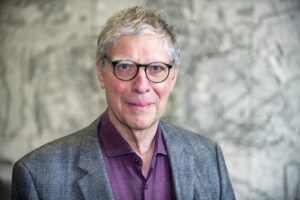
- Jesper Svenbro: “Vad är ett fragment? Vad är en försokratiker?”On May 9th 2025 we will organize a seminar with Jesper Svenbro on presocratic themes, guided by the question of the nature of the fragment. The seminar will be in Swedish. Time and Venue: 13-15, MB503 Jesper Svenbro is a distinguished Swedish poet, scholar, and member of the Swedish Academy, renowned for his contributions to both literature and classical philology. Educated at Lund University, where he earned his doctorate in Greek literature, Svenbro’s academic work focuses on ancient Greek poetics, linguistics, and cultural history, blending literary analysis with anthropological insights. His scholarly publications, such as Phrasikleia: anthropologie de la lecture en Grèce ancienne (1988), have been influential in the field of classical studies. As a poet, Svenbro’s work is celebrated for its intellectual depth and interplay between modern and ancient themes, often drawing on his expertise in classical antiquity. His poetry collections are characterized by their lyrical precision and philosophical reflections. Elected to the Swedish Academy in 2006, Svenbro continues to bridge the worlds of creative and scholarly writing, earning widespread respect in both domains.
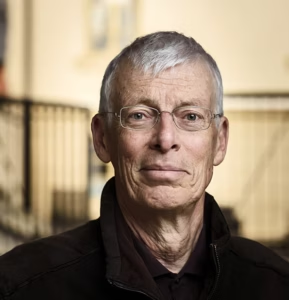
- David Bloch: “Translating Ancient Philosophy”On the 28th of March (13-15) David Bloch will give a talk about “Translating Ancient Philosophy”. Time and Venue: 13-15, PC249 David Bloch is a Danish philologist and historian of philosophy, currently serving as a professor at the Saxo Institute, University of Copenhagen. His research primarily focuses on ancient and medieval philosophy, with significant contributions to the study of Aristotelian texts. Recent publications include “Racism and the Odyssey: Translating the Colour of Odysseus’ Skin”, 2023, Universite de Copenhague. Institut du Moyen-Age Grec et Latin, Cahiers 92 and “Den sidste græker? Homer-oversættelser og klassicismen i Danmark” with Sevelsted, R. 2023, Aigis: nordisk tidsskrift for klassiske studier. Suppl. VII. Read more about Bloch’s research here. For those who wish to prepare, the followings texts are recommended: “Oversættelse af klassiske tekster. – Med en diskussion af Platons samlede værker i ny oversættelse I-VI, udg. af Jørgen Mejer & Chr. Gorm Tortzen (København 2009-2015). (https://researchprofiles.ku.dk/da/publications/overs%C3%A6ttelse-af-klassiske-tekster-med-en-diskussion-af-platons-sa) “Oversættelse og humanistisk forskning. – Med en diskussion af Platons samlede værker i ny oversættelse I-VI, udg. af Jørgen Mejer & Chr. Gorm Tortzen (København 2009-2015)” (https://researchprofiles.ku.dk/da/publications/overs%C3%A6ttelse-og-humanistisk-forskning-med-en-diskussion-af-platon) Please contact Christina Thörnquist for for information: christina.thomsen.thornqvist@sh.se
- Charlotta Weigelt: “Platon om historiens nytta och skada för livet”On the 7th of March 2025 Charlotta Weigelt will give a lecure entitled “Platon om historiens nytta och skada för livet”. Time and Venue: 14-16, PC249 Charlotta Weigelt is Professor of Philosophy at Södertörn University. She is the translator of Aristotle’s Physics and Nicomachean Ethics into Swedish, with an ongoing translation of the Metaphysics. She is currently President of the Nordic Society for Phenomenology, and member of the editorial board of Aiolos: Journal of Literature, Theory, and Aesthetics. She is the author of Socrates and the Possibility of Political Art (Axl Books 2015), Socrates: The Philosopher’s Many Faces (Faethon 2023) and numerous articles on Plato and ancient Greek philosophy.